10 Simple Steps to a Perfectly Planted Tree or Shrub
Proper planting is essential to the health of your tree.
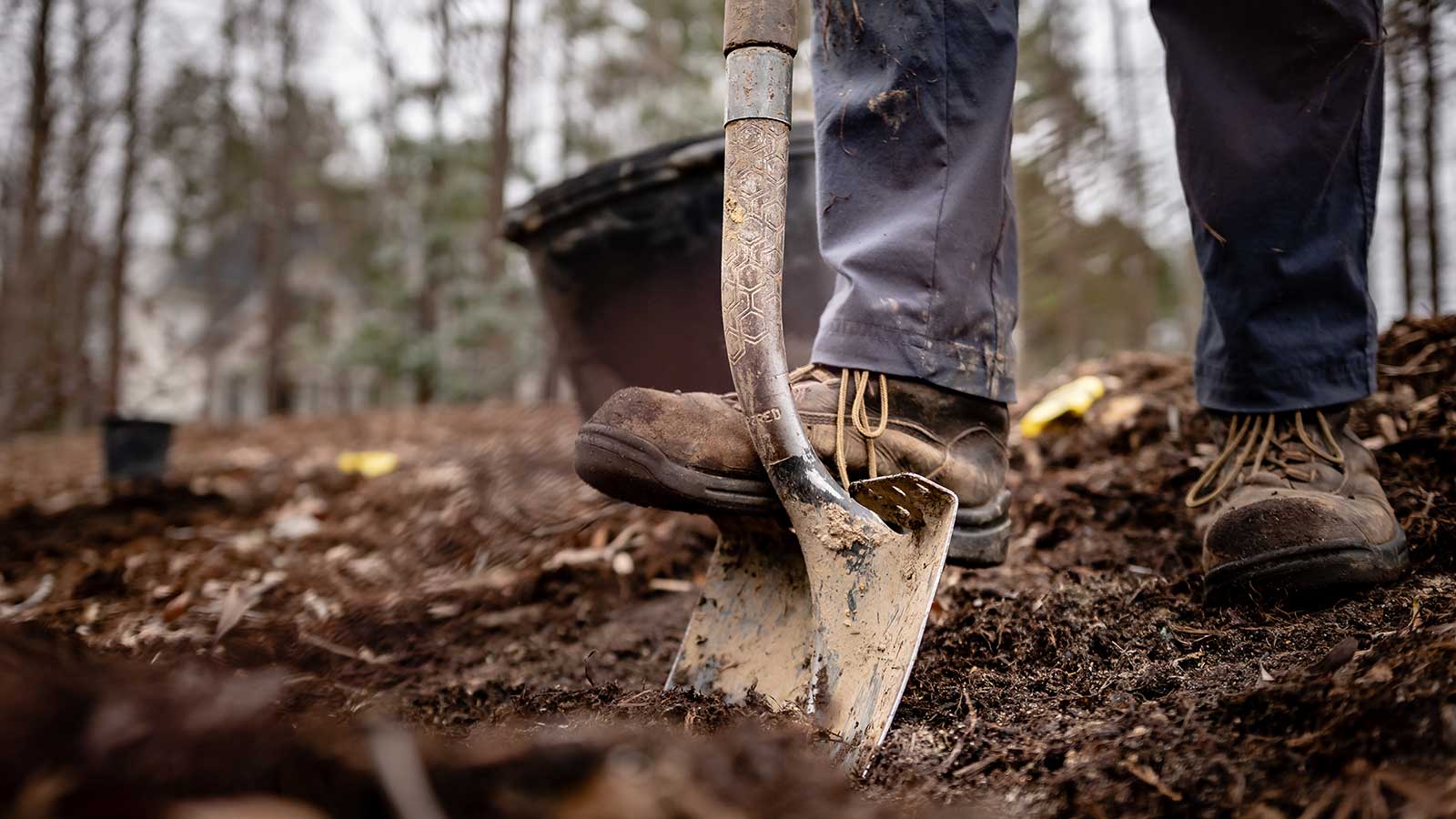
So you’re thinking about planting a tree. That’s great news! If you properly plant a tree, your tree will grow healthy and strong. New trees need good soil, sunlight, and space to grow a solid root foundation.
Planting a new tree doesn’t have to be overwhelming! Here’s a 10 step list to help you perfectly plant a tree.

1. Right tree, right place!
Before you begin planting, it is crucial to pick the right native tree species for the right spot. This will ensure that your tree has a long, healthy life. Why choose a native tree species? They withstand drought, benefit our local ecosystem, and are more resistant to pests and disease.
2. Find and expose the root collar
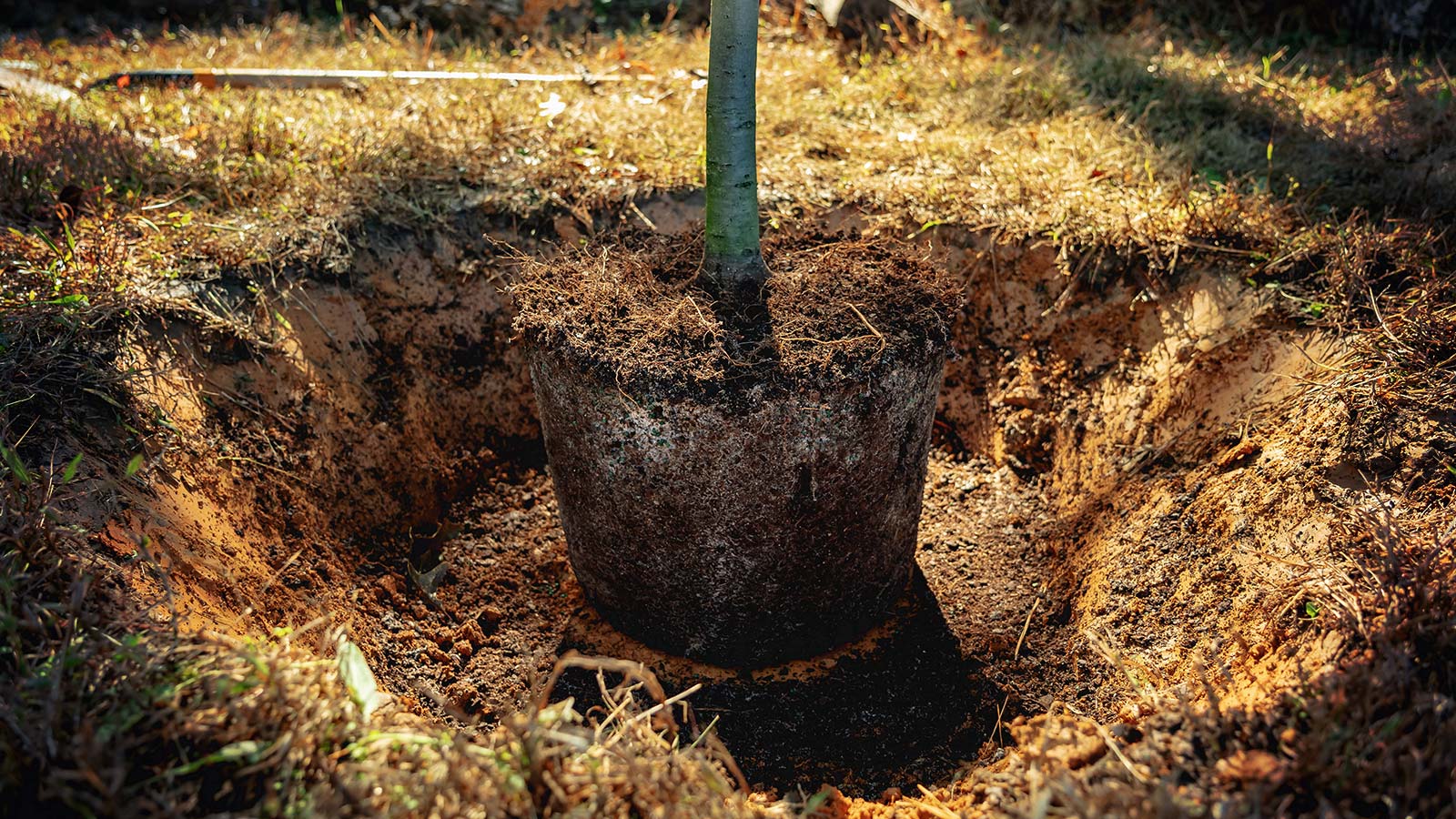
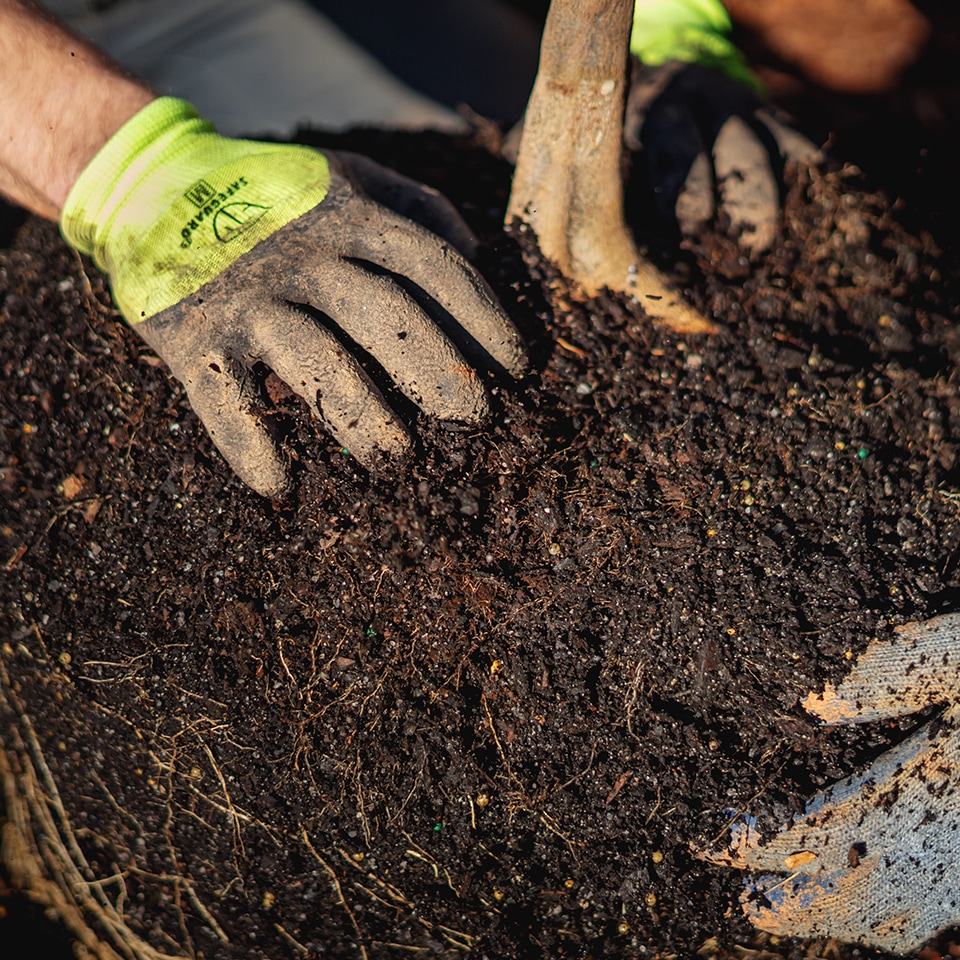
It's fairly common for trees that are purchased from a nursery to have their root collar buried. How do you find the root collar? Start digging into the soil at the top of the bucket or the top of the root ball. You might uncover a few small roots, but you are trying to find a larger structural root. A structural root is typically the same width as one of the main branches. The root collar is the place where that structural root connects to the trunk.
After locating the root collar, dig everything in the bucket down to that level. Now you have an exposed root collar which will help you determine how deep to dig your hole.

3. Measure and dig hole
Measure the root ball of your tree. The hole should be 3x the width of the root ball and exactly the depth from the root collar to the bottom of the root ball or pot to ensure that the root collar will not be buried. A buried root collar will stay moist and rot, killing the tree.
NOTE: Your safety is important! Before you start digging, be sure to call 811 to locate any underground utility lines.
4. Remove burlap sack or bucket
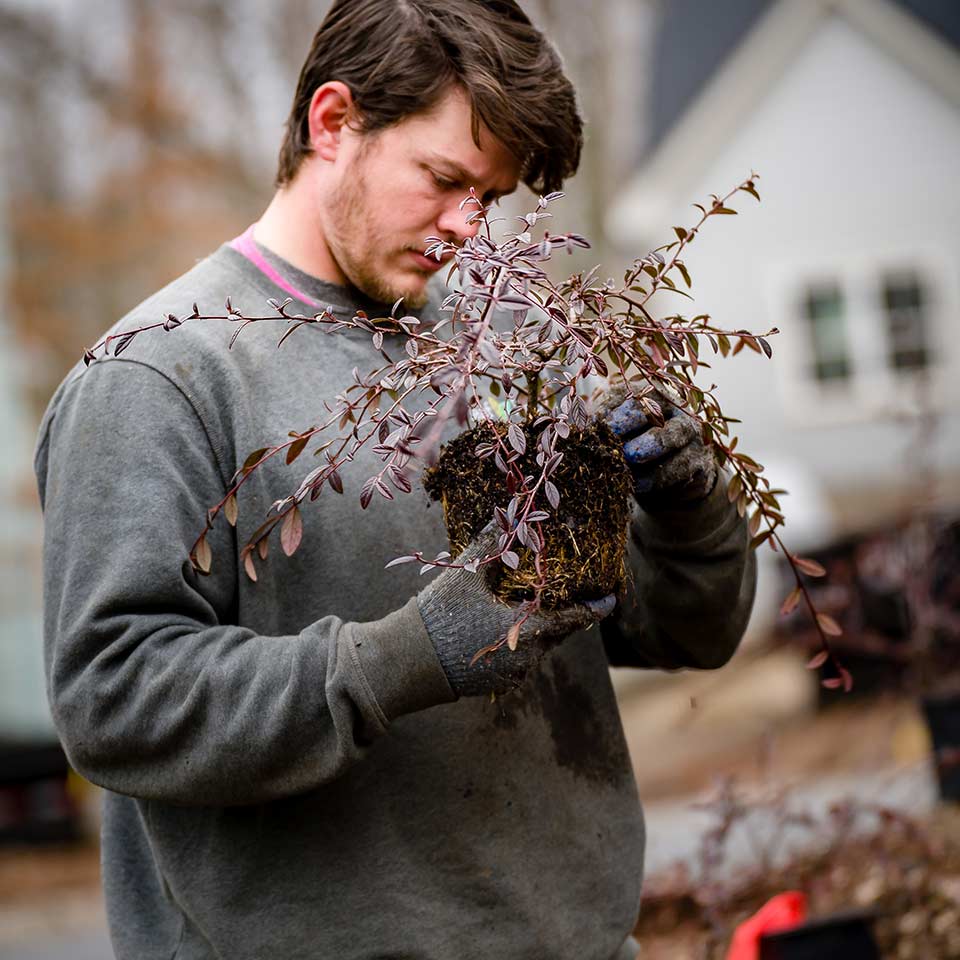
Squeeze the sides of the bucket and gently slide the tree out. If your tree is nested in burlap, cut and remove all twine and string that hold the burlap together.

5. Carefully place the tree in the hole
Gently place the tree in the hole. The most important part of placing the tree in the hole is to make sure the root collar is level or just above the surrounding grade. We recommend getting down on the ground and putting your head near the edge of the hole to ensure the root flare is above or at the surrounding grade.

6. Backfill (put soil back in the hole and mix with compost)
After you make sure the tree trunk is vertical, pack some dirt around the bottom third of the root ball to hold the tree in place. Then, fill the hole using a mix of soil and high-quality compost (no fertilizers!). Make sure you break apart any large clumps.

7. Gently compress the soil and add a final layer of compost.
Use one foot to gently compress the backfill soil around the base of the tree. Be careful not to overly compact the soil! The backfill must have plenty of pore space (like a sponge) to allow new roots to grow easily. Spread a final layer of compost on the compressed backfill.
8. Add wood chips!
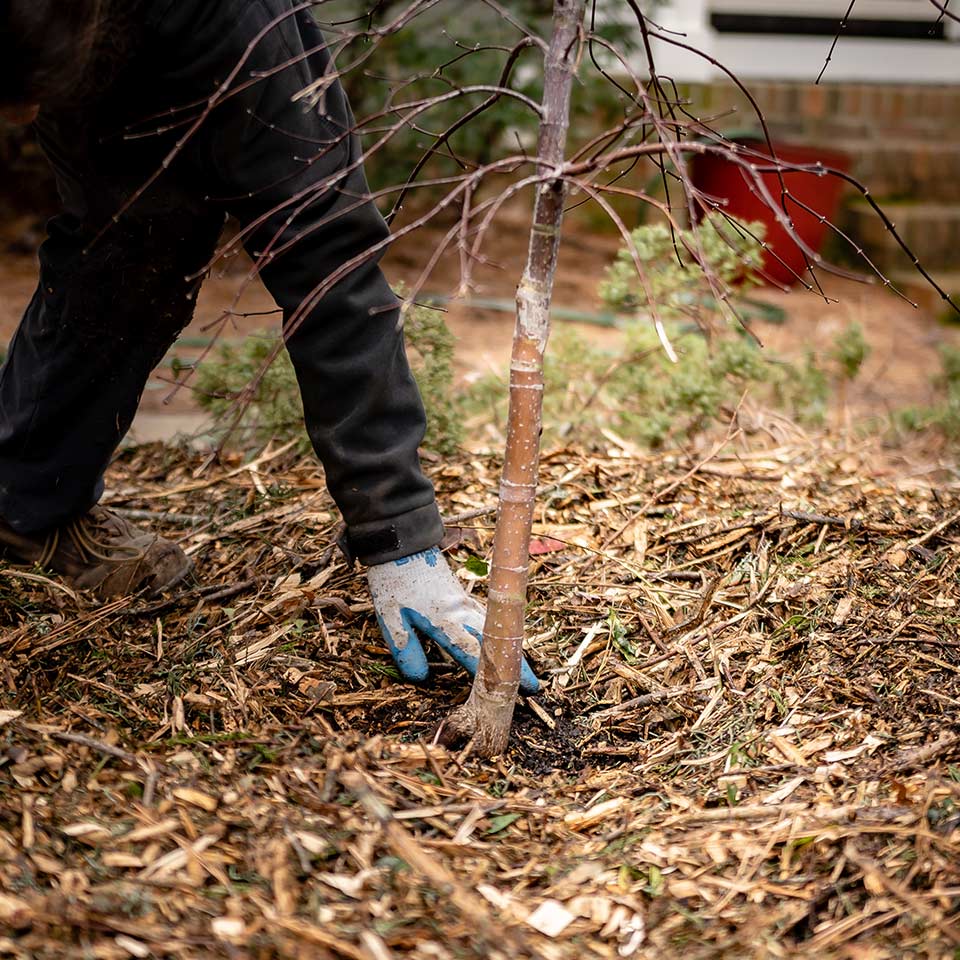
Liberally apply wood chips around the hole. Wood chips help to protect the tree’s roots, retain moisture, and add nutrients to the soil.
9. Don’t bury the root collar!
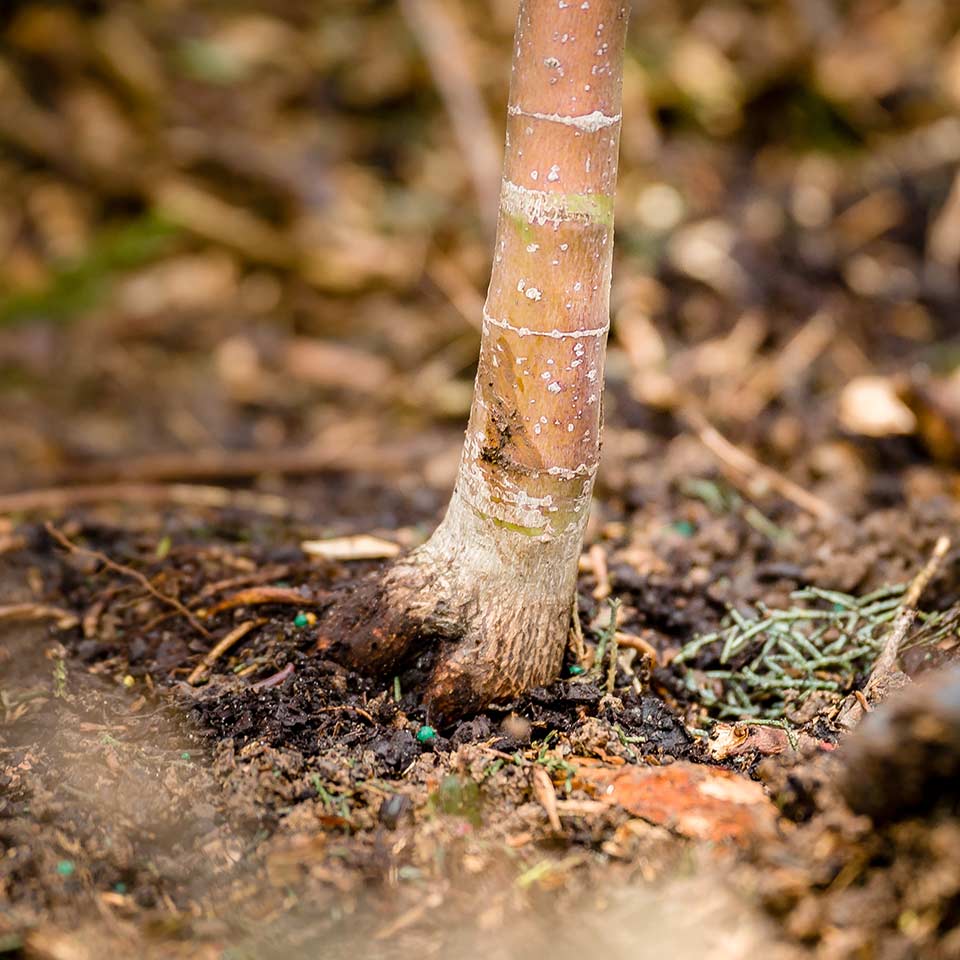
Have we mentioned that it's important to be sure the the root collar is NOT buried? After laying wood chips, go back and make sure the root collar is exposed. Remember, a buried root collar will stay moist and rot, killing the tree.

10. Water your newly planted tree
Once you’ve put in the hard work to plant your tree perfectly, you’ll spend the first two years watering the tree. Checking to see if your new tree needs water is simple. Pull back the mulch from around the base of the tree, grab some soil in your hands, and squeeze it. If you can squeeze water out, your tree is sufficiently watered, but if the soil is dry and dusty, it may be time to water your tree again.
Remember! After you plant a new tree, the first year it sleeps, the second year it creeps, and in the third year, it leaps! Happy planting!
Not sure where to start? We’re always happy to provide you with a free consultion or answer your questions, send us a message.