The Story of Durham’s Willow Oaks
Learn about the history of our willow oaks and how to care for these very old trees.
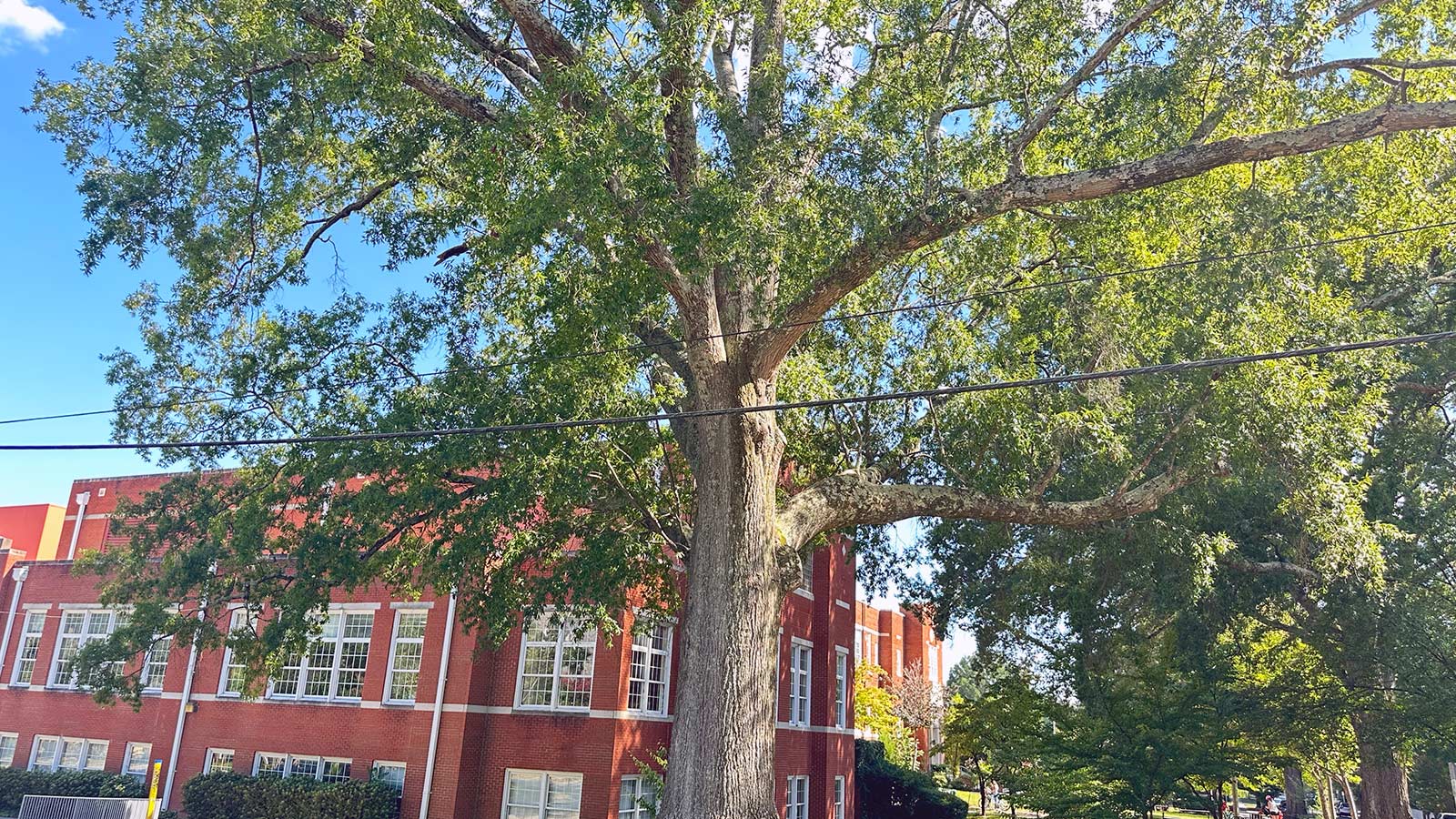
Why do we have so many willow oaks in Durham, and why are so many of them dying?
Read along as we weave the story behind the beloved oaks.
If you were to check out willow oak (Quercus phellos) in any field guide, you would find that this popular tree is a coastal plain native, from New York down to the Gulf and beyond. It is described as a “bottomlands” species. This means it likes wet feet. So, what the heck is it doing on the streets of Durham and other large cities?
Bottomland trees like or at least tolerate, wet feet, and have roots that are adapted to soggy, low oxygen conditions. They can thrive where other species struggle. This is their superpower. Urban soils are not usually soggy, but they are compacted by human use and often low in oxygen. So, they come well-suited to living in our hard, urban soils. They also have a reputation for pollution tolerance.
A Citywide Planting Effort
Urban foresters knew that willow oaks would be a great choice for the growing city, and thousands of willow oaks were planted along the streets of Durham in the 1930s and 1940s. This effort was led by groups like the Garden Club of Durham and Duke University forester Clarence Korstian.
These venerable trees grow fast and have a spreading, elegant crown. The small leaves are easy to rake and break down quickly. They seemed like perfect street trees!
Willow oaks might live well over a hundred years in their natural habitat, in a forest with other trees, but like most trees, they usually have shorter lifespans in urban conditions because of poor soil, limited root space, and many other stressors.
If you do the math, you’ll notice that many of the Durham oaks are reaching the end of their expected urban lifespans at 80 or 90 years old. Some of them might need to be removed, but many could live longer with a little care and some careful pruning.
The Value of a Single Willow Oak
It’s been reported that a single mature willow oak can:
- Provide 200–250 sq ft of canopy
- Intercept ~10,000 gallons of stormwater annually
- Sequester ~48 pounds of CO₂ annually
- Supply enough oxygen over its life to support two people
And that’s just for people. These oaks have tremendous value for the animals that share our urban space.
How to Care for Durham’s Living Canopy
In 2015 Durham had 13,000 old willow oaks on public land with burly trunks and large spreading canopies. Even though an oak that provides shade over your home might be on city property, its roots are very likely on your property too.
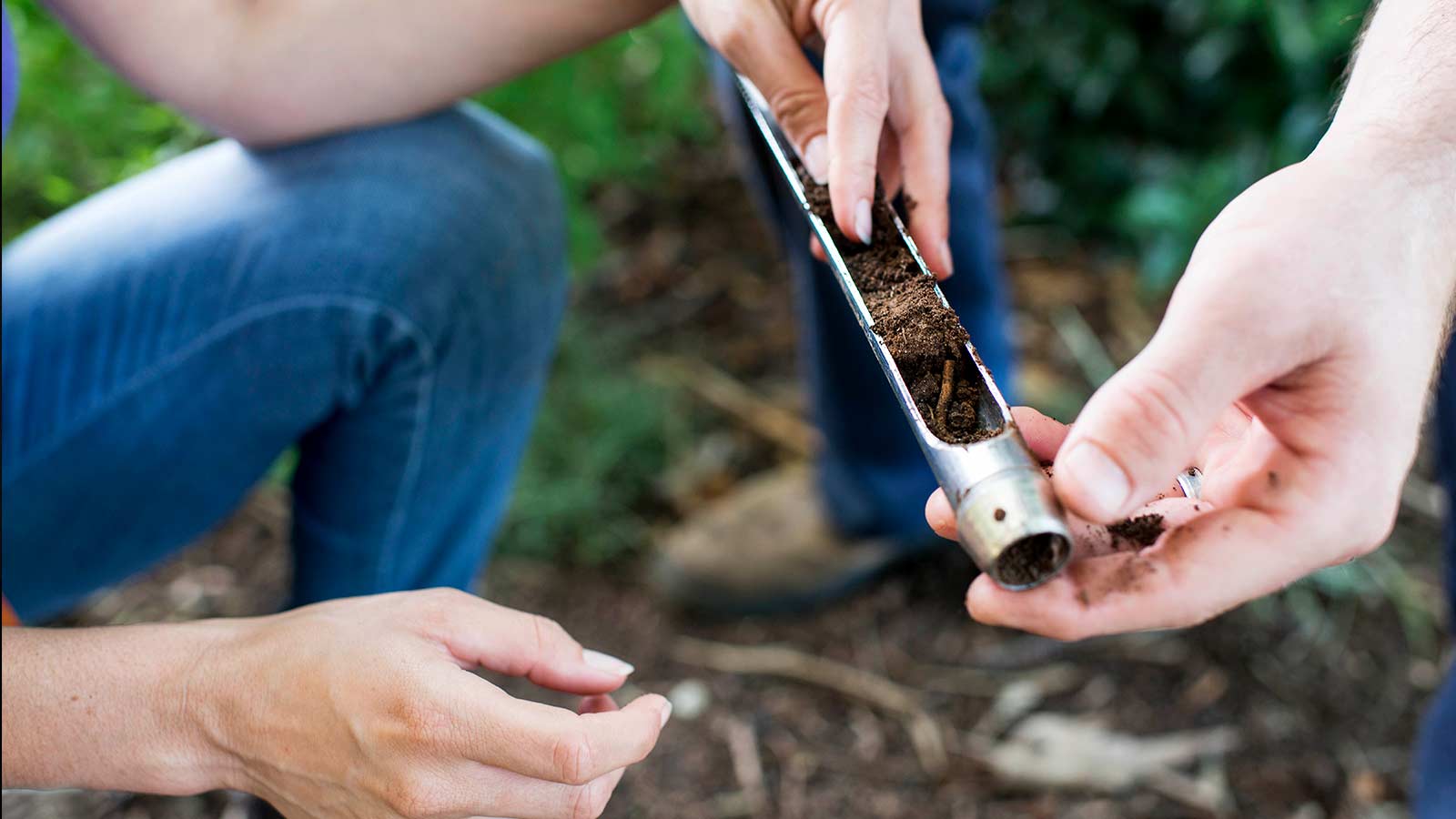
We can help these veteran trees, as well as the ones on your property, by taking care of the soil. Everything you do for the tree will also benefit everything else you are growing in your yard.
Here’s a checklist:
- Leave the leaves in fall
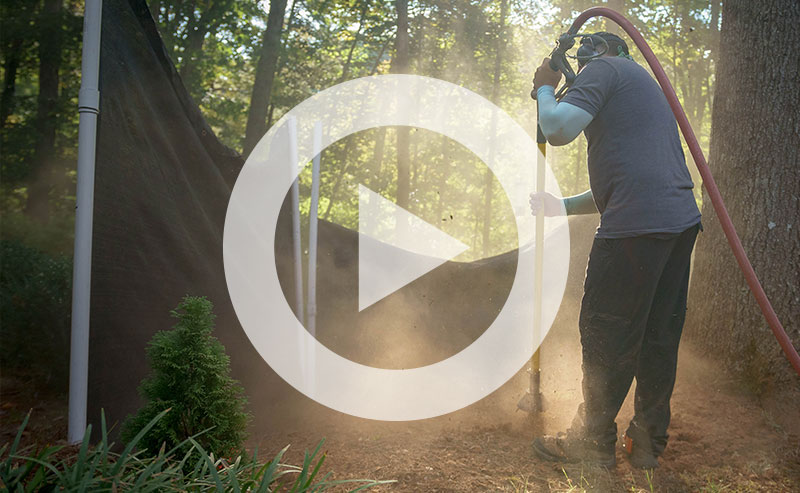
- Improve soil by having it aerated with an air-spade
- Add compost and wood chip mulch as far under the canopy as you can
- Consider compost tea application a few times a year
Do you have a willow oak in your yard or street?
Try one tip from the checklist this fall and then post a photo on social so we can celebrate Durham’s beloved canopy together! Or better yet, submit a story to our Tree & Me series
Or do you have a space where a willow oak was removed?
Encourage the city to replace it with a native tree like the ones in this list.
These trees don’t just provide shade, sequester carbon, and act as natural storm water management. They are part of Durham’s character, and they deserve a little TLC while we still have them.