Soil Improvement Made Simple: 7 Ways to Build Healthy Soil Naturally
Healthy soil is the foundation to healthy plants. Here's how to achieve it without tearing up your yard.
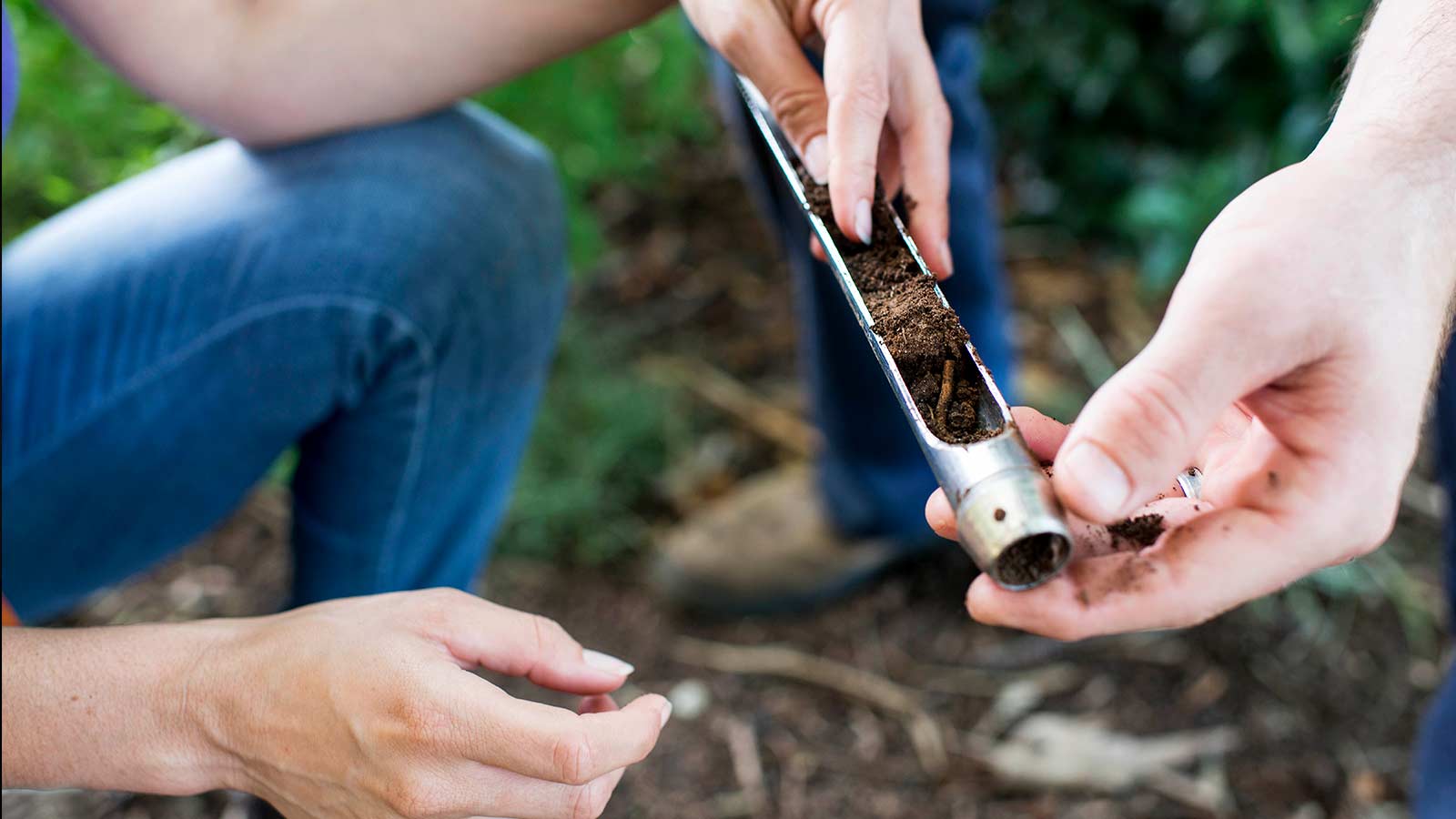
Suburban and urban soils are often compacted, depleted, and missing the life they once had. The good news? You don’t need to rip up your yard to fix it.
Healthy soil grows stronger trees, healthier plants, better lawns, and more resilient landscapes. Start with any (or all) of these simple improvements.
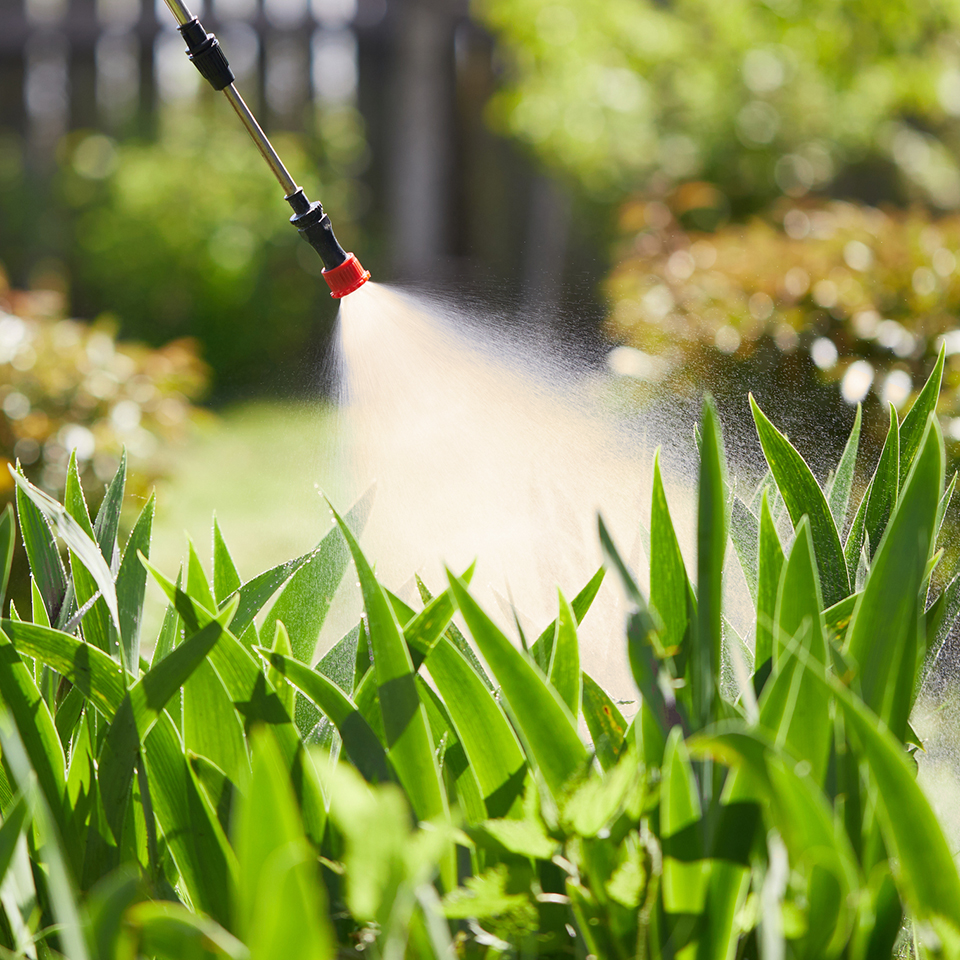
Apply Compost Fertilizer
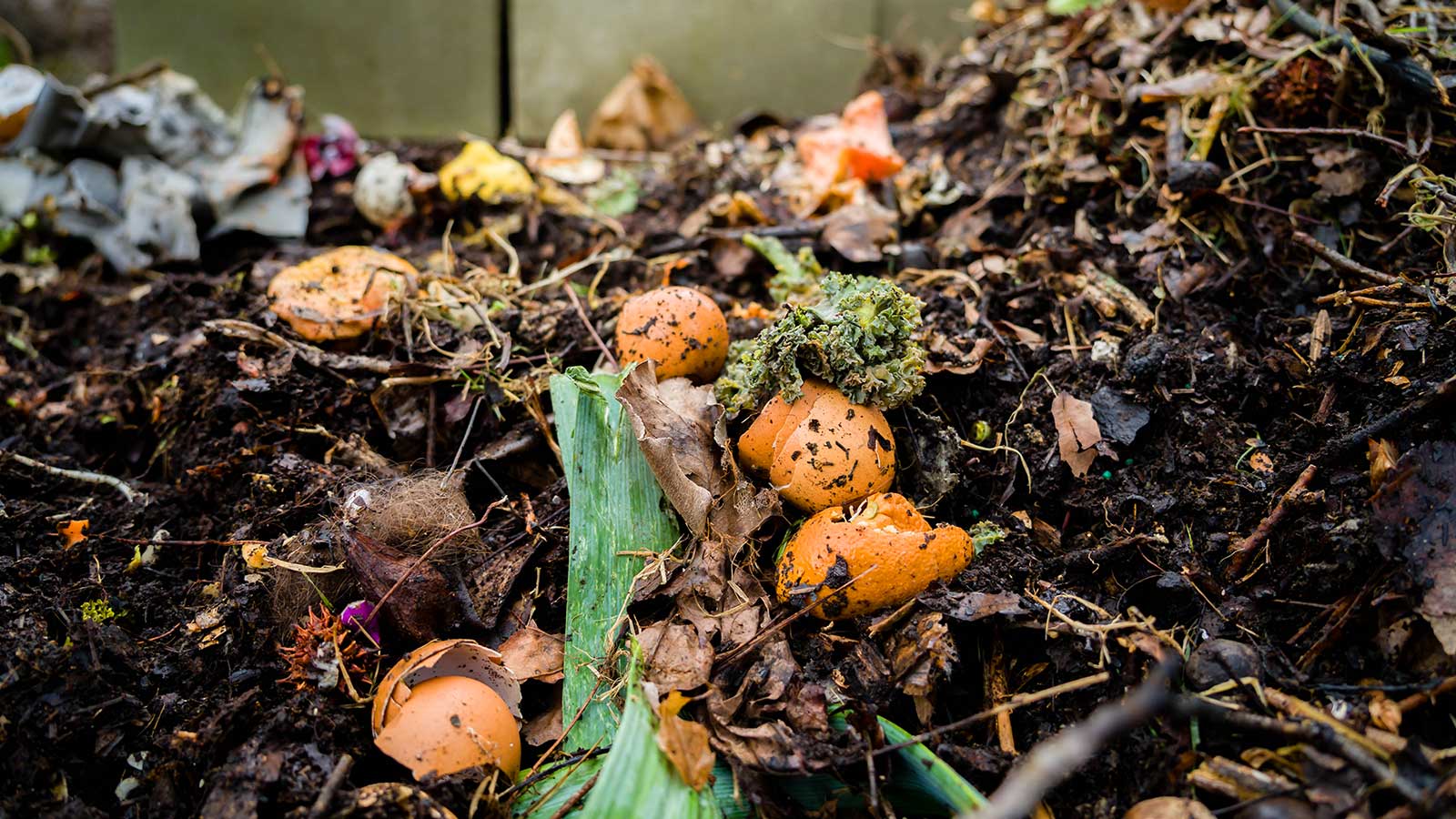
Why it matters: Compost feeds soil life, improves soil structure, and provides nutrients plants can actually use.
Do this:
- Apply compost fertilizer to your trees, shrubs, and garden beds any time of year. No more remembering schedules. It’s almost impossible to overdo it.
- Liquid compost (often called compost tea) doesn’t disturb the soil or mulch zone, making it ideal for lawns as well as trees and shrubs.
- Unlike synthetic fertilizers, compost fertilizer builds soil rather than just providing a quick fix.
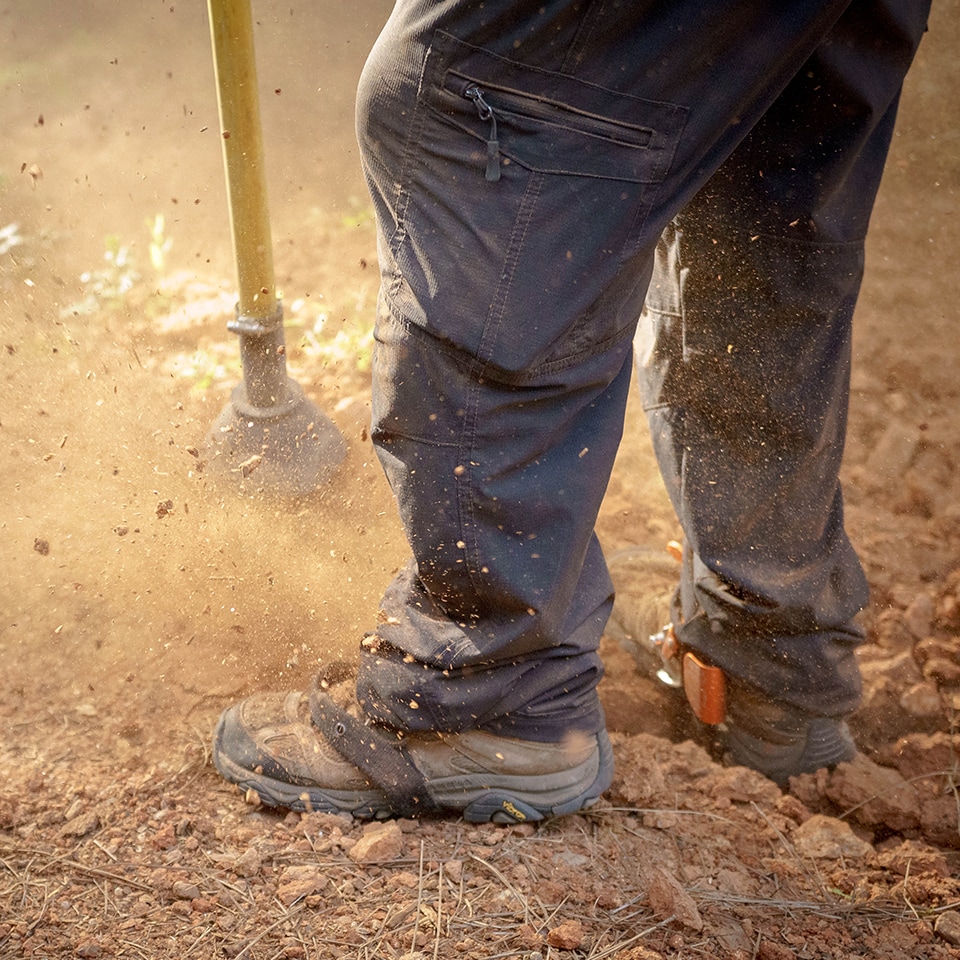
Aerate the Soil
Why it matters: Roots and soil organisms need oxygen. Compacted soil suffocates both.
Do this:
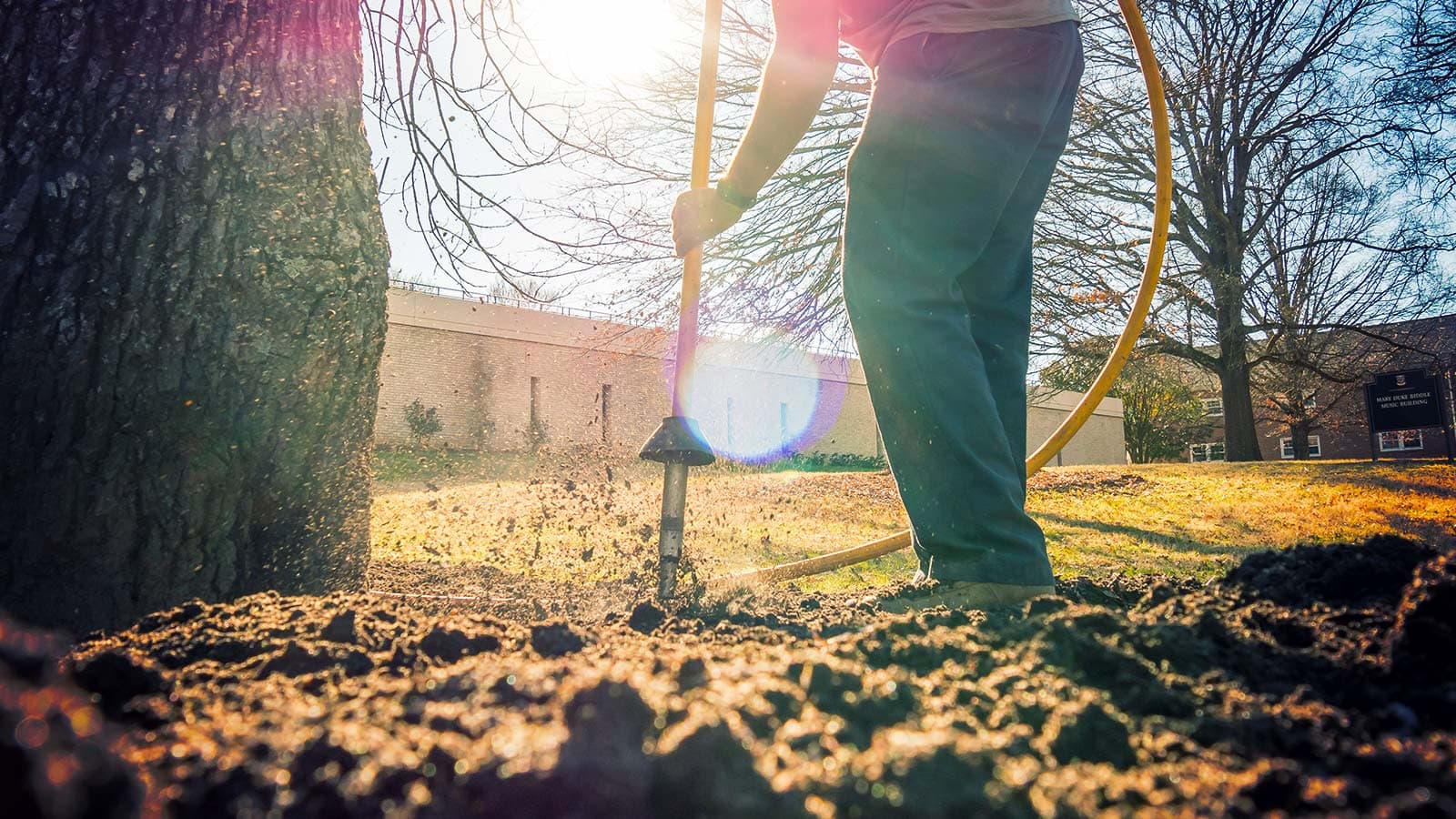
- The best way to do this is to hire a tree care company that offers air spading. Compressed air loosens the soil around your trees without damaging the roots.
- While this happens, compost (the magic bullet) can be mixed in, making the soil not just loose but also rich in nutrients and life.
You’ll notice:
- Rain soaks in instead of running off.
- Less erosion and puddling.
- Faster recovery of stressed trees and plants.
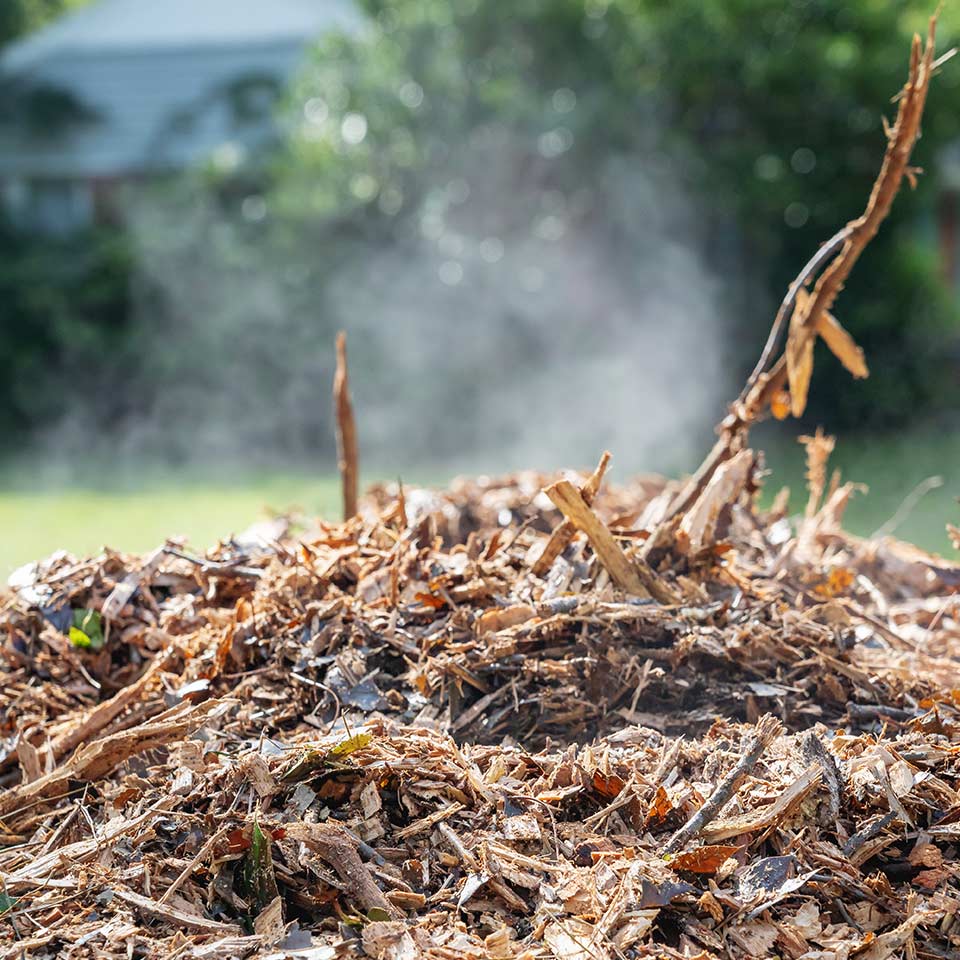
Cover Bare Soil With Arborist Wood Chips
Why it matters: Using arborist wood chips as mulch protects soil from heat, erosion, and moisture loss while feeding soil organisms over time.
Do this:
- Apply 2–4 inches of arborist wood chips around trees and planting beds.
- Keep arborist wood chips 3–6 inches away from trunks.
- Arborist wood chips decompose naturally, allow airflow, and recycle local tree material back into the landscape.
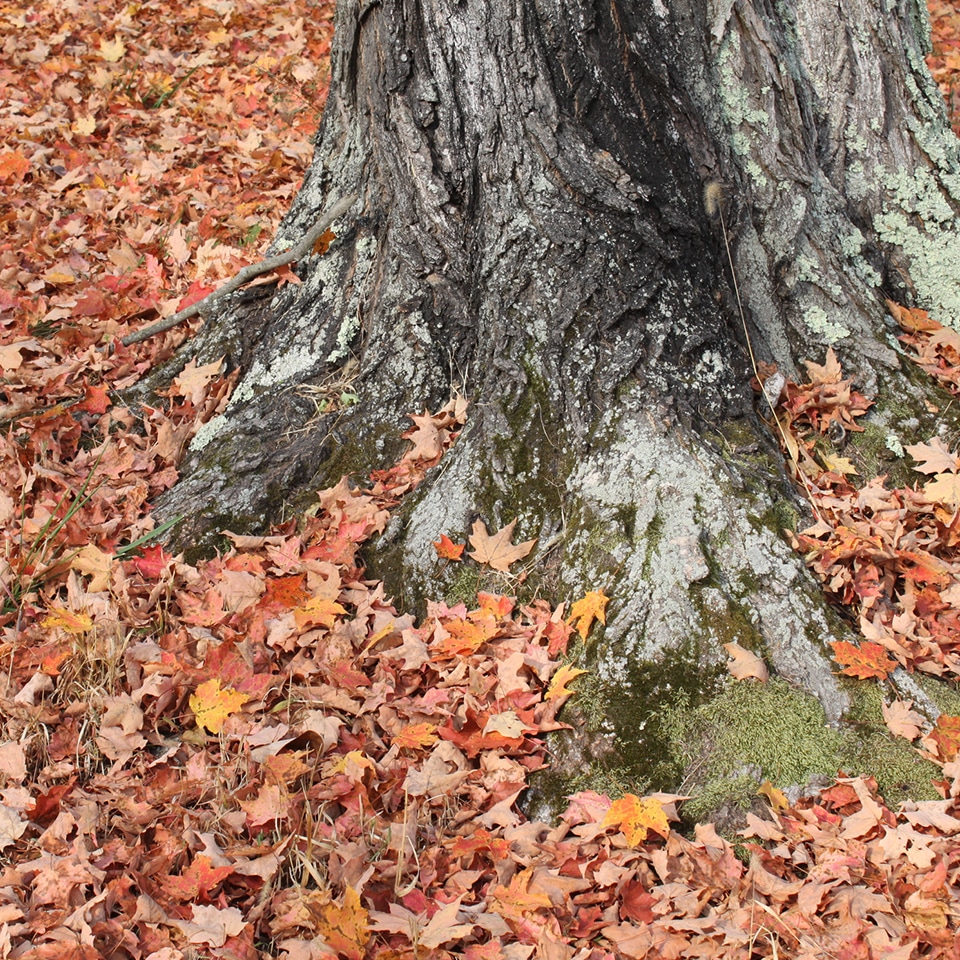
Leave the Leaves
Why it matters: Fallen leaves act like free mulch and provide critical habitat for beneficial insects and wildlife.
Do this:
- Leave leaves under trees and shrubs.
- Rake only where access or safety requires it.
If you love your backyard birds, leaving the leaves is one of the best ways to provide them with a food source in early spring and a quality habitat. Who knew that improving your soil is also “for the birds” (in the best possible way)?
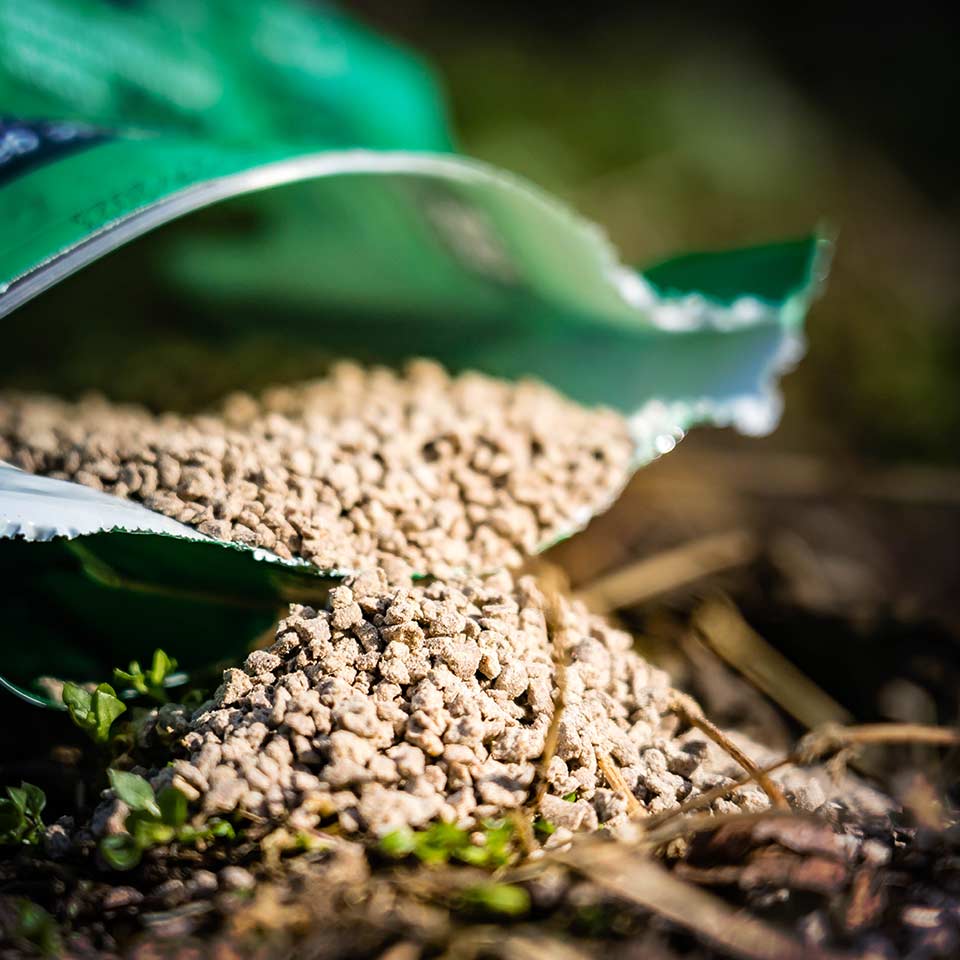
Stop Using Synthetic Fertilizers
Why it matters: Salt-based fertilizers feed plants temporarily but damage soil biology long-term.
Instead:
- Build fertility with compost fertilizer, arborist wood chips, and by leaving your leaves.
Synthetic fertilizers:
- Increase soil salinity
- Disrupt beneficial microbes
- Create dependency cycles
Adding synthetics, even with good intentions (perhaps to provide an “extra boost”), won’t help.
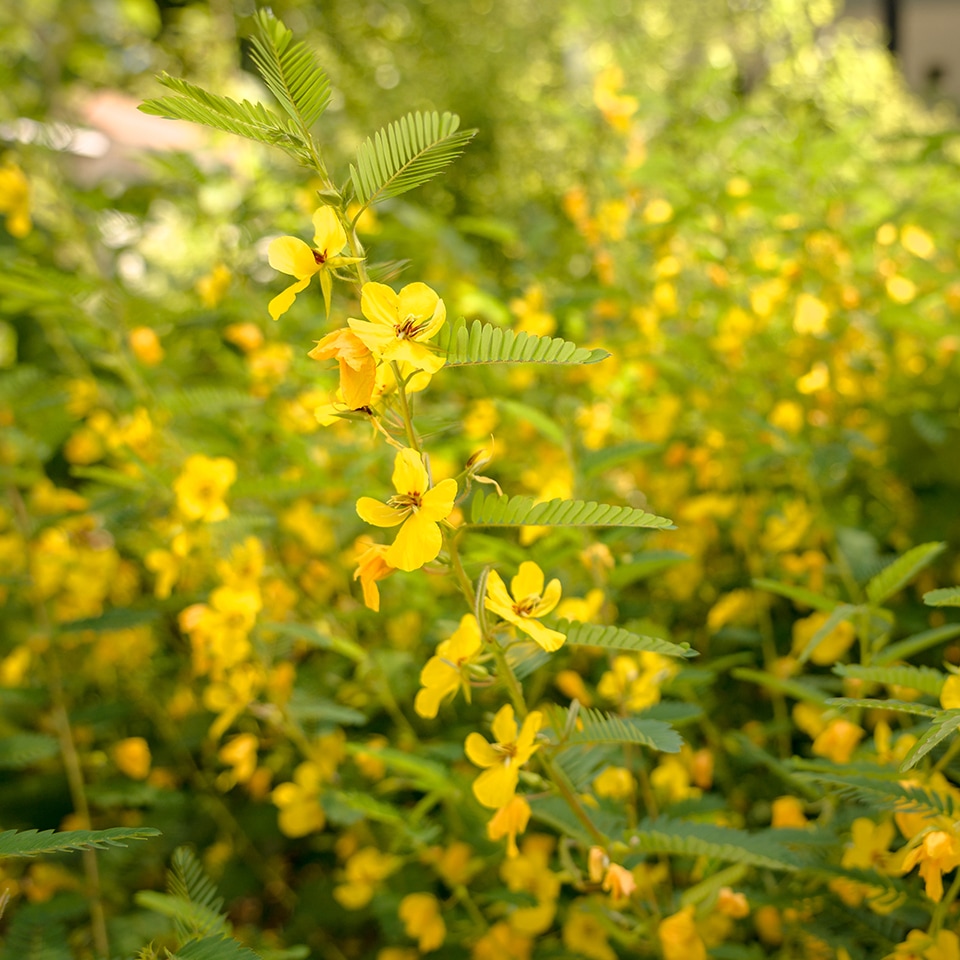
Plant More Native Plants
Why it matters: Living roots stabilize soil, prevent erosion, and feed soil organisms year-round.
Do this:
- Aim for 70% perennial plant coverage in landscaped areas.
- Plant generously around your trees to reduce foot traffic that compacts soil.
- Choose native plants instead of turf grass under trees. This prevents patchy areas since most grass doesn’t tolerate shade.
Bare soil is prone to erosion and compaction. Where there are roots, the soil will improve, and where there is good soil, there will be more roots and healthier plants.
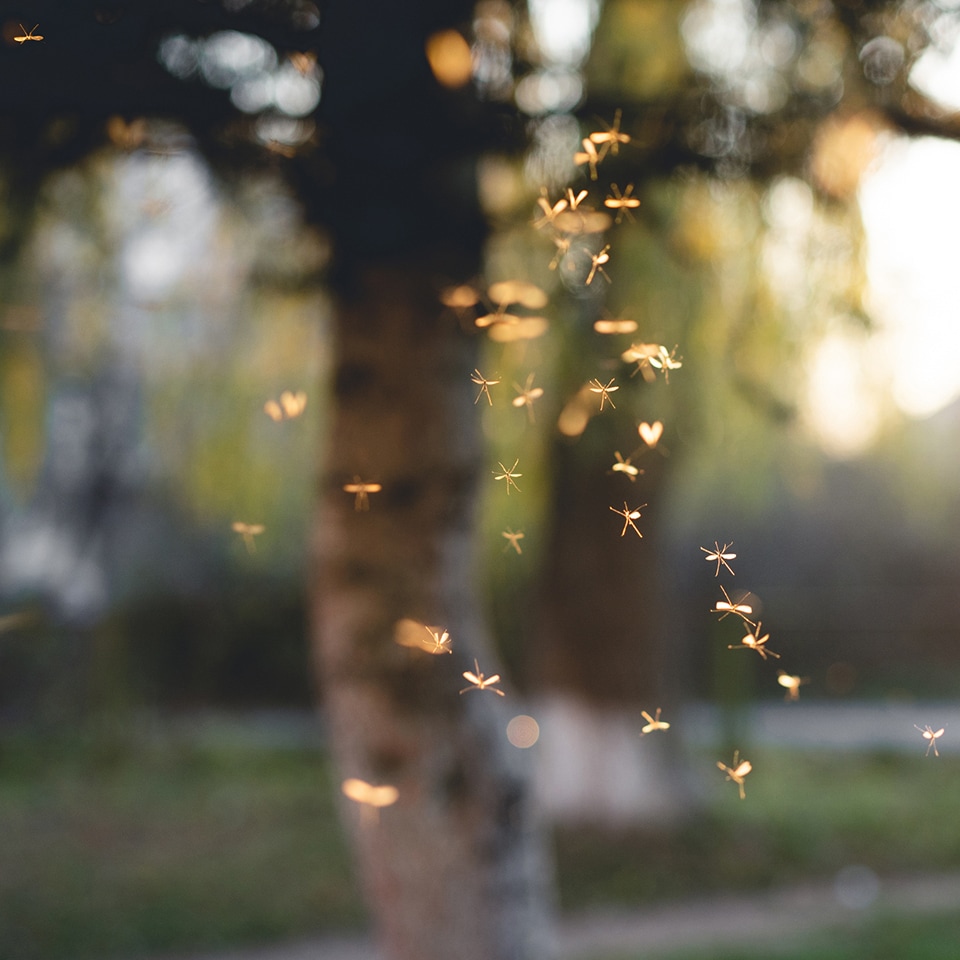
Reduce Hidden Chemical Stressors
Why it matters: Many common yard practices quietly damage soil biology.
Watch out for:
- Mosquito fogging sprays
- Chemical de-icers
- Excessive nighttime lighting
Pesticides reduce soil biodiversity, salts disrupt soil chemistry, and artificial light interferes with natural plant and microbial cycles.
Leaf & Limb’s Soil Improvement Program
When soil is severely compacted or trees are already showing signs of stress, surface treatments alone may not be enough.
Leaf & Limb’s professional soil improvement program restores soil function.
Step 1: Decompaction Using Air Spading
We use compressed air to loosen compacted soil without damaging roots. This restores oxygen flow, improves drainage, and creates space for roots and soil organisms to thrive.
Step 2: Compost Incorporation
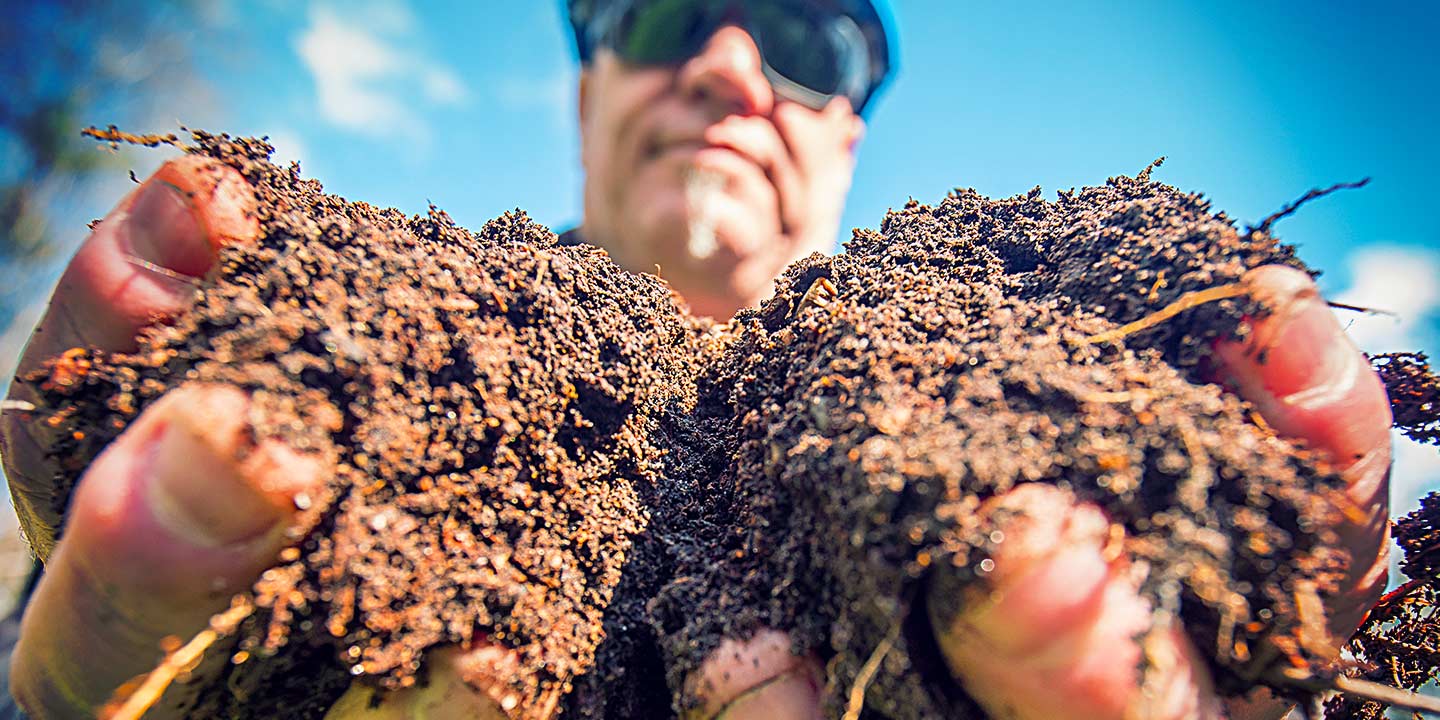
Once the soil is loosened, we blend high-quality compost into the root zone. This introduces beneficial microbes and organic matter that rebuild soil biology and nutrient cycling.
Step 3: Arborist Wood Chip Mulch Layer
We finish with a protective layer of arborist wood chips to conserve moisture, prevent erosion, moderate soil temperature, and continue feeding the soil over time.
The Result
- Improved water infiltration
- Stronger root development
- Healthier trees and plants
- Reduced runoff and erosion
- Long-term soil health
This approach mirrors how soil improves naturally in forests — air, organic matter, and protective ground cover working together.
If your trees seem stressed, your lawn struggles, or rainwater pools and runs off, your soil may be compacted and lifeless. Get a free quote and bring your soil back to life!